

INFO
Differentiate Between Rugby And Football
The old origins of two great sport games.
Rugby and football have an interesting parallel history that makes for one of the most fascinating stories in all of competitive sport. Both Rugby and football derive from the same common ancestor namely the uncodified ball games played throughout England and Europe. This happened in the years leading up to the formalization of modern sport in the nineteenth century. Moreover, this has given both sports a depth of cultural heritage. As a result, both sports continue to shape their identities, traditions, and meaning for the communities that follow them today.
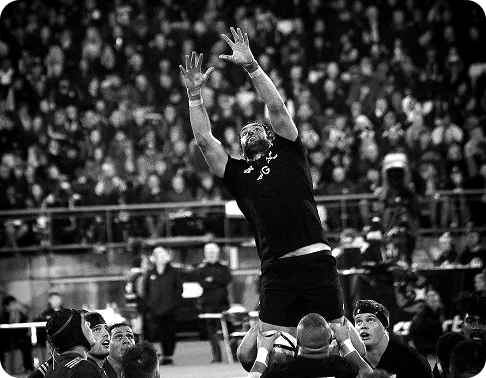
According to the best-known origin myth of rugby, the story of how one game became two dates back to 1823, when a student named William Webb Ellis at Rugby School in England lifted the ball and ran with it during a game of football. And so, it was the individual act of a runaway – spontaneous at the time – that symbolically separated the two games, which developed independently of each other from a common origin over the ensuing decades of rule-making and institution-building. The Football Association was founded in 1863 along with a codification of Laws of the Game, which made the association football game distinct from the handling codes. Rugby union received its codification when the Rugby Football Union was formed in 1871, and rugby league separated out in 1895 over disputes about player payments. The simultaneous evolution of both sports from the same root gave birth to two of the most widely loved and culturally significant competitive activities in human history, each possessing its philosophy of play and values, and each boasting an extraordinary capacity to inspire through passionate loyalty and a sense of community in the societies and nations where they took deepest root.
Football – The Game That Brings Together The World.
Football is the most broadly played; most widely followed, and most commercially significant sport in the world. Roughly four billion people regularly follow football for entertainment and competition. It is the closest thing to a truly universal human language that competitive sport has ever produced. Every nation, culture, language community, and social class on earth has its share of football fans. The world’s most popular sport is no accident. Football has real characteristics that make it instantly playable, instantly understood and instantly gratifying in most cultural settings.
These qualities include the simplicity of its basic premise; the universality of the physical skills it rewards; the clarity of its scoring; and the incredible dramatic potential of a 90-minute time frame in which anything and everything can happen last-gasp turnarounds, unexpected moments of individual brilliance, and stunningly beautiful collective performances.
Professional football nowadays works at a scale and level of commerce which would have been entirely inconceivable to the Victorian founders of the sport, with the top clubs functioning as global entertainment brands that have supporter communities in every country on earth, transfer market valuations of individual players running into hundreds of millions of dollars, and broadcast rights packages worth billions every year across the major domestic leagues and international competition formats.
Football is the only sport that has achieved the status of a cultural phenomenon in the sense that it reaches out beyond the game itself and permeates art, music, politics, fashion and community life, in ways that no other global sports can even hope to replicate. In other words, football is not just a game, it is arguably one of the great shared experiences of today’s human civilization.
The Football Association Ecosystem – Identity Rivalry & Passion
Club football forms the emotional and commercial backbone of the global game, generating the deepest and most personally felt loyalties in all of sport through the unique relationship between supporters and the clubs that represent their communities, cities, and in many cases their entire sense of cultural and social identity across generations of family allegiance. The Premier League in England, La Liga in Spain, Serie A in Italy, Bundesliga in Germany, and Ligue 1 in France are Europe’s major professional leagues. These leagues are at the top of the club football pyramid.
They are able to attract the best players in the world by virtue of their huge financial resources and competitive ambitions. Despite being at the summit of club football they continue to sustain local fan cultures and the match-day atmosphere that makes stadium football an irreplaceable experience as a live event. Derbies between local rivals – Manchester United against Manchester City, Real Madrid against Barcelona, Milan against Inter, Boca Juniors against River Plate – are some of the most exceptional and emotionally charged sporting experiences available anywhere in the world.
These matches generate levels of civic passion and communal intensity that go beyond sport and raise the fundamental questions of belonging and identity that make football a potent social force. The pyramid structure of club football, wherein clubs are promoted or relegated every year, creates stories of triumph and tragedy at every level of the game, from the Premier League to the lowest-tier amateur leagues. This feature is one of the most distinctive and democratic features of football as it ensures that competitive meaningful football with real consequences exists at every socioeconomic level of the communities where football is played.
Rugby demands courage, physicality and a tremendous spirit!
Rugby combines physical courage with collective sacrifice and an ethical code known as the spirit of the game, which refers to playing hard, playing fair and respect for on and off field opponents and officials. Most importantly, it involves the realisation that what happens on the rugby pitch reflects who you are as a player, as a team and as a community.
The game requires an extraordinary combination of physical attributes from its players which make the rugby athlete one of the most well-developed in all of competitive sport. The explosive power and collision strength of a forward, the speed and evasion skills of a back, the kicking precision of a specialist and the aerobic endurance necessary to sustain high-intensity effort throughout 80 minutes of uninterrupted physical contact is uniquely demanding on every system of the human body.
Rugby union is played between fifteen players per side across international test matches and club competitions on every continent. Rugby league is played between thirteen players per side with a slightly different rule set that prioritises continuous play and attacking momentum. These two sports are generally classified as distinct but related sporting traditions. However, both share the same values when it comes to physicality, teamwork, and competitive intensity. At the same time, rugby league and rugby union produce distinctly different competitive experiences that each attract devoted and passionate followings around the world.
The culture of rugby is simply that after a game, players should share food and drink, whatever the intensity of the exchange during the game; that match officials deserve respect; that while winning matters very much, it should never matter more than how you play. This gives rugby a moral and social aspect that its most devoted followers regard as being at least as valuable as any trophy or tournament win.
Rugby Union
tests, tournaments and the ultimate honour.
International rugby union test matches that take place between the great rugby nations of the world are considered the highest and most prestigious level of competition rugby union can offer, which provides players with a thrilling occasion to represent their national team, possessing the white, red, green, black, gold or blue jersey of their country, which is regarded as the pinnacle of eminence that can ever be bestowed upon any player thanks to rugby union, regardless of what they achieve at club level throughout their professional career. The Rugby World Cup has been held every four years since the inaugural event in 1987 and is now widely regarded as one of the largest and most commercially important sporting events on the world stage. Furthermore, the Rugby World Cup sees the best national teams from all the rugby-playing regions of the globe come together for an exciting tournament. Moreover, the ourtament is a rigorous test of every aspect of the competing nations’ rugby development; the depth of talent, the quality of their coaching structures, the sophistication of their tactical thinking, and the composure and character in moments of pressure that distinguish the best rugby nations from the merely competitive. The Six Nations Championship is an annual rugby tournament that takes place between England, Ireland, Scotland, Wales, France, and Italy. It is the oldest international rugby tournament in the world that still exists today. Furthermore, This is one of the most closely followed sporting events in Europe. To obtain the grand slam which means to beat all five teams in one tournament . It is something that only the best generations of rugby in any country can achieve. The Rugby Championship in the Southern Hemisphere involving New Zealand, South Africa, Australia and Argentina provides the most consistently high standard of international rugby played anywhere in the world; the All Blacks of New Zealand maintaining over the course of the professional era the most remarkable sustained record of international sporting excellence in the history of any team sport, winning about 75 per cent of all test matches they have played since the game became professional in 1995. Rugby League – Speed, Skill and Northern Pride.
After it split from rugby union in 1895, rugby league developed its own identity and competitive culture. In the 1890s, a rebellion by northern English clubs caused a split in rugby football, with those in favour of compensating working-class players for time lost from employment to play rugby breaking away to form rugby league. It started to evolve its own rule set and competitive philosophy. Rugby league developed a powerful community identity in the working-class communities of northern England, Wales and later Australia and New Zealand. Thanks to the rules of the game, which require the ball-carrying team to surrender possession after six tackles. This creates a regular rhythm of attacking sets and defensive resets. The required style of play is one characterized by continuous running. So precise passing, an athletic collision in the tackle, and a creative use of space through individual and collective skill. Rather than the often more forward-dominated attritional patterns that can occur in fairly random phases of union play. Apart from the NRL and Super League, there are many other professional leagues that take place throughout the world. These leagues include that of Welsh rugby, Italian rugby, and the French Elite One Championship. Despite the different formats of play, the goal is more or less the same in that your aim is to score a try as well as convert goals. The State of Origin clash between players from New South Wales and Queensland in Australia probably levels up to be the most intense, uncompromising sporting rivalry in the southern hemisphere. The three match per year contest between state-selected teams creates a level of physical intensity, emotional investment and communal passion between the people of both states that goes far beyond what any club competition could ever produce even at its most dramatic; was a quote from an expert associated with the best assignment writing service in Australia.
Elite Rugby: The Physical and Mental Demands
Professional rugby union and rugby league are two of the most physically demanding and all-encompassing professional team sports in existence. Competitors require the collision strength and body composition of a power sport, the aerobic endurance of a distance sport, the speed and agility of a running sport, and the technical skill and spatial awareness of a precision sport, all within the one athlete. This remarkable all–round athletic profile takes years of systematic and concerted development to build to professional standard. Today’s professional rugby players are put through remarkable physical preparation programmes to help them maximise their ability to both deliver and absorb collisions of extreme force. Moreover, they must also maintain the requisite speed, agility and endurance to compete effectively throughout 80 minutes of high-intensity, continuous play that may involve running distances of between 8km and 12km per match depending on playing position. The mental aspect of professional rugby is just as remarkable, and perhaps less well-known by those who often think only of the physical aspect. Professional rugby players need to implement a strategy, almost instantaneously, that reads and exploits the opposition’s defensive set-up. Players are also communicating; more specifically – the movement and decision-making of fifteen players at once must be coordinated, all while a live match is happening. And of course, the mental endurance needed to go out there and perform boldly and confidently under circumstances of extreme physical disadvantage will be something most sporting competitors will never experience, let alone possess the mental strength to succeed thereafter. Rugby is a team sport that originated in England. It has evolved over the years and is now played by men and women all over the world. There are two main types of rugby – Rugby Union, which consists of 15 players, and Rugby League, which features 13 players. Both contact sports share similarities, yet have some key differences as well. In fact, the game of rugby is responsible for birthing many other sports like American football and Canadian football.
Rugby as we know it today traces its origins back to a game of football (or soccer) played at Rugby School in Rugby, Warwickshire. During a game in 1823, a player named William Webb Ellis picked up the ball and ran with it, after which the ball began to be carried at games at Rugby School. He is often credited as the inventor of the game, but such claims are often contested. Rugby was developed over the years by Football Association rulings as well.
World Rugby serves as the international governing body of rugby. This is a sport that was first played at international competitions in 1908 and features at the Olympic Games as well. Rugby union has the most number of nations affiliated to the world body. One of the biggest annual rugby matches is the Six Nations Championship/
Sport’s Event Calendar and Major Sporting Events.
The yearly and four-year calendars of rugby and football from which important competitions arise whose significance for the teams, players and communities involved is critical, create a seasonal rhythm of expectancy, drama and resolution aqua marks out for enthusiasts of rugby, and football sports, a year-round saga of extraordinarily, richness and emotional power of the complexities of these two sports to see other rivalries possess but little in the way of the intensity of such enduring competition. In football, as your domestic leagues season runs from early August to late May (with cup competitions of course) and the continental championship of UEFA Champions League and UEFA Europa League football is full of layers. Different clubs with different goals to pursue all at once: title, top four, cup, survival.